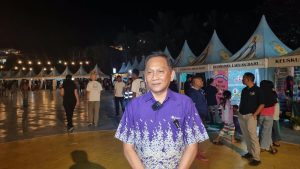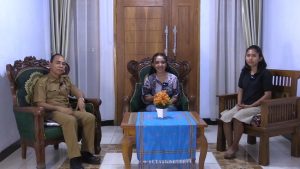
LABUAN BAJO, August 17, 2026 – A spirit of diversity and devotion filled the Waterfront City Marina area today with the staging of the Cultural Carnival and the Maria Assumpta Nusantara Grand Dance Performance. As part of the Golo Koe Festival 2026 series, the event served as a grand showcase of Labuan Bajo—a place defined by its multi-ethnic and multi-religious makeup, yet united in harmony and tolerance.
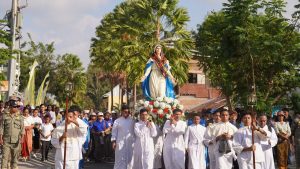
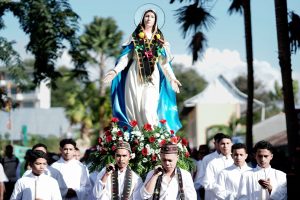
This year’s Cultural Carnival featured a total of 1,584 participants organized into 53 contingents. The parade procession began in front of Siloam Hospital and concluded at the Waterfront City activity hub. Various segments of the community were actively involved, ranging from church-based groups (parishes, WKRI, and Catholic women’s organizations) and government agencies (West Manggarai Regional Government, TNI, Polri, and the Ministry of Religious Affairs) to educational institutions spanning from preschools to high schools and vocational schools.
The carnival’s main attraction is the participation of various ethnic associations showcasing the cultural richness of the archipelago—ranging from the Rote community’s Kebalai dance and the Javanese community’s Reog Ponorogo performance to the Weka dance from Sumba and the Dolo dance of the Lamaholot people. The presence of these diverse ethnic and religious groups reinforces Labuan Bajo’s role as a harmonious “shared home.” Beyond its religious significance, the carnival is also integrated with the celebration of Indonesia’s 81st Independence Day, evident in the vibrant display of red-and-white attributes throughout the procession.
The Grand-Scale Maria Assumpta Nusantara Dance
The highlight of the carnival festivities was the Maria Assumpta Nusantara colossal dance, beautifully performed by 550 students from SMKS Stella Maris Labuan Bajo. This dance was not merely an artistic performance, but an act of devotion and a prayer in motion offered to Mother Mary.
Philosophically, this dance portrays Mary as a mother who faithfully embraces everyone, regardless of differences in ethnicity, religion, or social group. The performance reflects a blend of the Catholic faith and the local Manggarai culture, which deeply values togetherness, diversity, and environmental preservation.
In their performance, the dancers form three main formations derived from the noble philosophy of the Manggarai people:
- Lingko formation: A spiderweb-shaped pattern of customary land division that reflects local wisdom in resource management.
- FGK 2026 Formation: Represents the identity of this year’s Golo Koe Festival as a symbol of unity.
- Mbaru Niang (Drum House) Formation: Featuring the Compang symbol, this formation embodies the center of life, justice, and the sovereignty of the indigenous community.
The performance was further elevated by the accompaniment of inculturated music, poetry readings, and traditional torok (Manggarai ceremonial oratory). Songs such as Ivan Nestorman’s “Manikmata Lonto Cama” accompanied the dancers’ movements, creating a spiritual oasis that stirred the hearts of the thousands of spectators packing the Waterfront City stands.
Through this synergy of culture and religion, the Golo Koe Festival 2026 is expected to serve as a platform for passing on Manggarai traditional values to the younger generation, while simultaneously promoting sustainable tourism rooted in local wisdom.
“Stepping Together, Restore the Earth”
Contact Person: Heribertus Ratu (0813984619570),
Publication and Promotion Section, Golo Koe Festival Committee 2026
Website: festivalgolokoe.com
YouTube Live Link for the Carnival and Colossal Dance:
Photo content can be downloaded here.